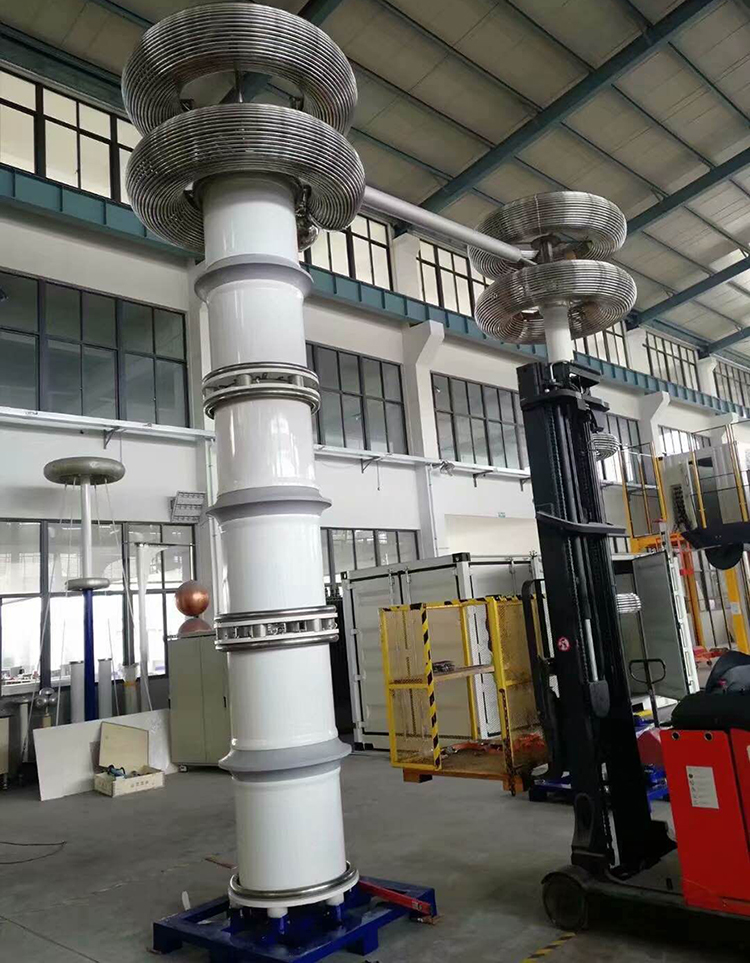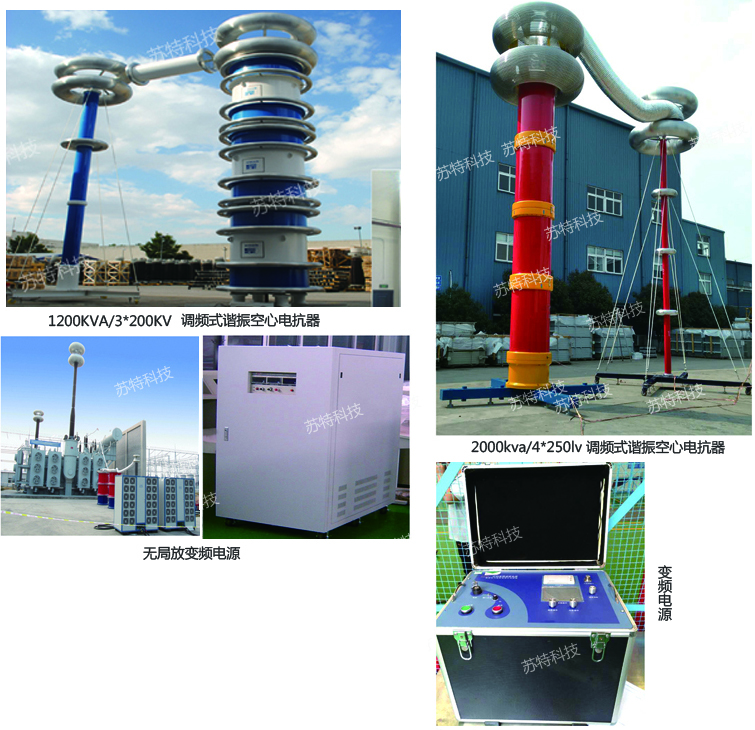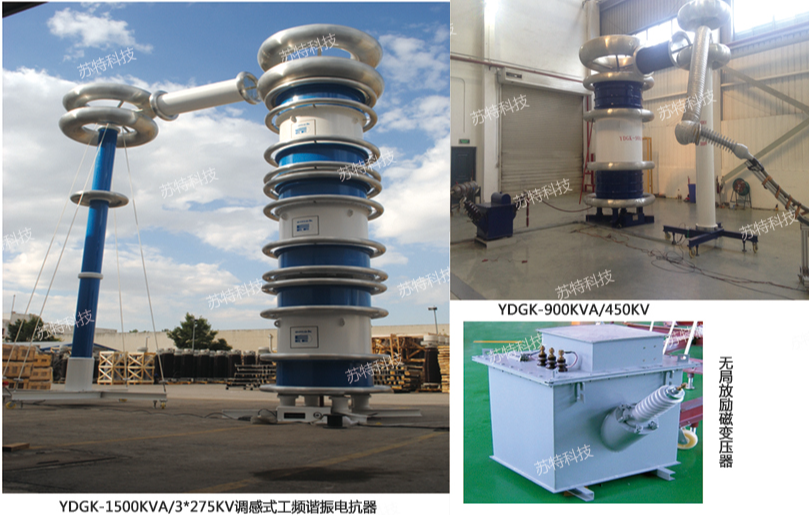


Frequency Modulated Resonant Reactor for High Voltage AC Resonant Testing Systems
SUTE FM Induction Modulated Resonant Reactor is a key component designed for high voltage AC resonant testing systems. It adopts frequency modulation technology and inductive resonance principles to generate stable and high-quality AC high voltage output for dielectric withstand tests of electrical equipment.
The reactor is mainly applied in variable frequency resonant test systems for testing high voltage power equipment, including transformers, GIS, GIS components, power cables, circuit breakers, and other capacitive electrical equipment.
By adjusting the operating frequency of the power supply, the reactor works together with the capacitive load of the tested object to achieve resonance, significantly reducing the required input power while producing high test voltage with excellent waveform quality.
Product Overview
In conventional high voltage AC withstand testing, large-capacity test transformers and power supplies are often required. The FM Induction Modulated Resonant Reactor provides an efficient alternative by utilizing resonance technology.
When the inductive reactance of the reactor matches the capacitive reactance of the test object, the system enters a resonant condition. Under this condition, the test system can generate high voltage with relatively low input power consumption.
The frequency modulation method enables flexible adjustment of resonance conditions, allowing the testing system to adapt to different capacitance loads and various voltage levels.
This technology is widely used in modern high voltage test systems because it offers advantages such as reduced equipment size, improved voltage waveform quality, and convenient field application.
Working Principle
The FM Induction Modulated Resonant Reactor operates based on the principle of series resonance.
The main circuit consists of:
- Variable frequency power supply
- Excitation transformer
- Resonant reactor
- Tested capacitive load
- High voltage measuring system
During operation, the variable frequency power supply changes the output frequency. When the frequency reaches the resonance point between the reactor inductance (L) and the test object capacitance (C), the system generates resonance voltage.
The resonance frequency can be expressed as:
f = 1 / (2π√LC)
At resonance:
- The reactive power circulates between the reactor and the test object
- The power supply mainly provides active power losses
- High voltage output can be achieved with lower input capacity
This principle allows the system to perform high voltage AC withstand tests efficiently and economically.
Main Features
1. Frequency Modulation Resonance Technology
The reactor is designed for variable frequency operation, enabling accurate resonance searching and stable high voltage output.
The frequency adjustment capability allows the system to match different test objects with different capacitance characteristics.
2. High Voltage Testing Capability
The reactor is suitable for high voltage AC withstand testing applications, including:
- Power transformers
- GIS and GIL systems
- XLPE power cables
- Switchgear
- Insulators
- Other high voltage electrical equipment
Variable frequency resonant systems are commonly applied for factory tests, commissioning tests, and preventive maintenance tests of high voltage equipment.
3. Low Power Consumption
Compared with traditional high-capacity test transformers, the resonant testing method requires much lower power supply capacity because most reactive energy circulates inside the resonant circuit.
This helps reduce:
- Test system size
- Equipment weight
- Installation requirements
- Operating costs
4. Excellent Output Waveform Quality
The resonant circuit naturally filters harmonic components and provides a near-sinusoidal AC voltage waveform.
Benefits include:
- Reduced waveform distortion
- More accurate withstand testing
- Lower risk of incorrect insulation failure caused by harmonic peaks
5. Modular Design for Flexible Applications
SUTE FM Induction Modulated Resonant Reactor can be configured according to different testing requirements.
Multiple reactor units can be combined in series or parallel connection to achieve higher voltage levels or larger testing capacity.
This modular configuration is widely used in portable and laboratory high voltage test systems.
Applications
Power Transformer Testing
Used for AC withstand voltage tests of power transformers during:
- Factory acceptance testing
- Installation commissioning
- Preventive maintenance
GIS and Switchgear Testing
Suitable for high voltage insulation testing of:
- GIS equipment
- Circuit breakers
- Disconnect switches
- Busbars
Cable Testing
Applied for AC voltage withstand testing of:
- XLPE underground cables
- High voltage transmission cables
- Cable systems after installation
Research Laboratories
Suitable for:
- High voltage research platforms
- Electrical equipment laboratories
- Testing institutes
Technical Advantages
| Feature | Benefit |
|---|---|
| Frequency modulation control | Flexible resonance adjustment |
| High Q-factor design | Higher voltage amplification efficiency |
| Modular reactor structure | Easy transportation and installation |
| Low input power requirement | Reduced system capacity |
| Pure sine wave output | Accurate insulation testing |
| Customized voltage/current rating | Adaptable to different projects |
Why Choose SUTE FM Induction Modulated Resonant Reactor?
With experience in high voltage testing equipment manufacturing, SUTE provides customized resonant reactor solutions according to customer testing requirements.
Our FM Induction Modulated Resonant Reactor features:
- Professional high voltage engineering design
- Customized voltage and capacity configuration
- Integration with complete resonant test systems
- Reliable operation for laboratory and field applications
- Technical support for international customers
SUTE provides complete solutions for:
High Voltage AC Resonant Test Systems | SF6 Gas Testing Transformers | Impulse Voltage Generators | Impulse Current Generators | High Voltage Test Equipment