Instrument Transformer Testing Systems
CT & VT High Voltage Tests
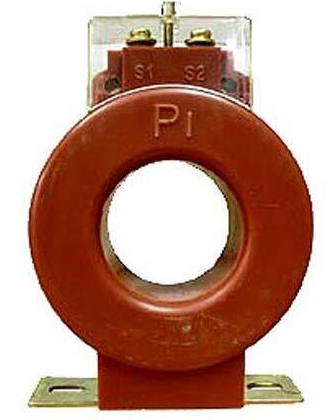
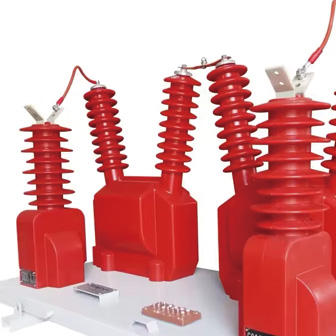
Instrument transformers are essential components in electrical power systems. They provide scaled electrical signals for metering, protection, monitoring, and control while maintaining the required insulation between high-voltage primary circuits and secondary circuits.
Reliable instrument transformer performance depends on more than transformation ratio and measurement accuracy. The insulation system must also withstand specified power-frequency voltages and transient overvoltages, while the windings and associated structures must meet applicable thermal and mechanical requirements.
High-voltage testing is therefore an important part of instrument transformer manufacturing, design verification, and quality assurance. The required tests depend on the transformer type, rated voltage, insulation design, intended application, and applicable product standards.
Which Tests Are Required for Instrument Transformers?
Instrument transformer testing is generally organized into routine tests, type tests, and special tests, with commissioning or field tests applied where required by the relevant standard, contract, or project specification.
-
check
Power-frequency voltage withstand tests.
-
check
Partial discharge measurements, where applicable.
-
check
Inter-winding and secondary-circuit dielectric tests.
-
check
Transformation ratio, polarity, and accuracy verification.
-
check
Insulation resistance and other specified electrical checks.
-
check
Gas-tightness or pressure-related checks for applicable gas-filled designs.
-
check
Lightning impulse voltage withstand tests.
-
check
Temperature-rise tests.
-
check
Short-time thermal and dynamic current withstand tests for applicable CT designs.
-
check
Accuracy tests and other specified electrical performance tests.
-
check
Environmental, mechanical, or enclosure-related tests where applicable.
-
check
multiple chopped impulse tests
-
check
transmitted overvoltage tests
-
check
other tests specified by the applicable standard and customer requirements
Sute Instrument Transformer Testing Solutions
- ACWV & PD Test
- LIV Test
- STC & PWC Test
Purpose
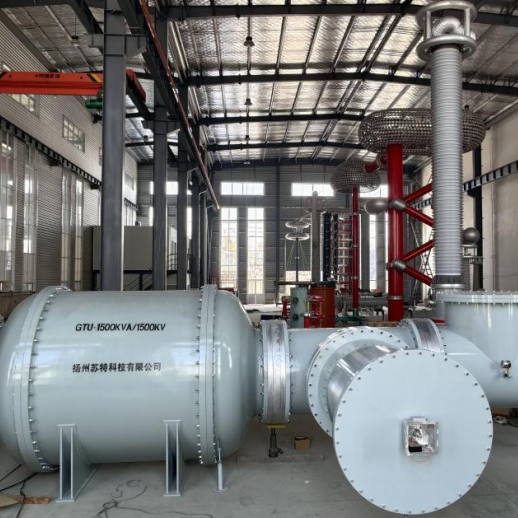
To verify insulation withstand capability and evaluate partial discharge performance under specified electrical stress.
Recommended SUTE Equipment
SF₆ Testing Transformer — AC high-voltage generation for applicable test configurations.
SF₆ FM Resonant Reactor — for suitable capacitive test objects and system configurations.
Purpose
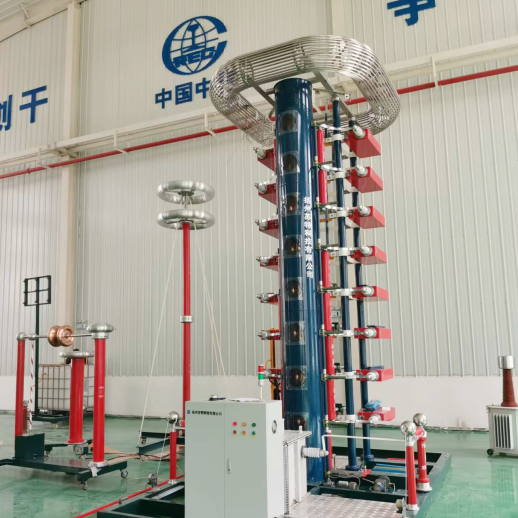
To verify the ability of the instrument transformer insulation system to withstand specified transient overvoltages, such as lightning impulses.
Recommended SUTE Equipment
Impulse Voltage Generator
SF₆ Gas-Insulated Lightning Impulse Generator
Purpose
To verify that applicable current transformers can withstand specified short-circuit current stresses without unacceptable thermal or mechanical damage.
Recommended SUTE Equipment
Q & A
-
What tests are required for current transformers?
Current transformer testing may include power-frequency voltage withstand, partial discharge, lightning impulse withstand, ratio and accuracy verification, and short-time thermal or dynamic current withstand tests where applicable. The exact requirements depend on the CT design, rated voltage, and applicable product standard.
-
What is the difference between CT testing and VT testing?
Both require verification of specified insulation and measurement performance. CTs may additionally require short-time thermal and dynamic current withstand tests. VT testing focuses on voltage transformation, accuracy, insulation, and other requirements appropriate to its design.
-
Why is an SF₆ armored test transformer used for instrument transformer testing?
It provides an AC high-voltage source for suitable dielectric test applications. Its compact gas-insulated construction and low partial discharge characteristics can be beneficial in appropriately designed high-voltage test systems. Actual performance depends on the selected equipment and complete test circuit.
-
Which equipment is needed for a lightning impulse test?
A suitable impulse voltage generator, impulse voltage divider, measuring and recording system, control and triggering equipment, and appropriate safety protections are normally required. The test circuit must be configured to meet the applicable waveform and measurement requirements.
-
Is an impulse current generator required for every CT test laboratory?
No. A power-frequency high-current source and an impulse current generator serve different purposes. The impulse current generator should be included only when required by the laboratory's specified test program.
-
Can one high-voltage test system perform all instrument transformer tests?
Generally, no. AC withstand, impulse voltage, high-current withstand, partial discharge, and accuracy tests require different source and measurement functions. Some equipment can be integrated into a common laboratory platform, but each test must still meet its own technical requirements.