Power Cable Testing
High-Voltage Testing Systems for Power Cable Applications
Power cables are essential components of modern power transmission and distribution networks. Reliable cable insulation and electrical performance are critical to the safe operation of power systems.
Yangzhou Sute provides high-voltage testing equipment for power cable testing applications, supporting cable manufacturers, electrical testing laboratories and power industry organizations. Our solutions cover AC withstand voltage testing, impulse voltage testing and other electrical tests, with system configurations selected according to cable characteristics and testing requirements.
Whether for manufacturing quality control, product qualification or specified installation and maintenance tests, the appropriate testing system helps verify cable performance under defined electrical and operating conditions.
Power Cable Testing Requirements
Power cable testing requirements vary according to cable design, rated voltage, insulation material and the applicable testing standards. Different stages of the cable lifecycle require different testing methods and equipment configurations.
-
check
AC voltage withstand testing
-
check
Partial discharge measurement, where specified
-
check
Electrical insulation verification
-
check
AC withstand voltage testing
-
check
Impulse voltage testing, where required
-
check
Partial discharge and other specified electrical tests
-
check
AC high-voltage testing
-
check
Thermal cycling and associated measurements
-
check
Test monitoring according to the qualification program
-
check
AC withstand testing, where specified
-
check
Insulation testing using an appropriate method
-
check
Partial discharge measurement, where required
High-Voltage Testing Solutions for Power Cables
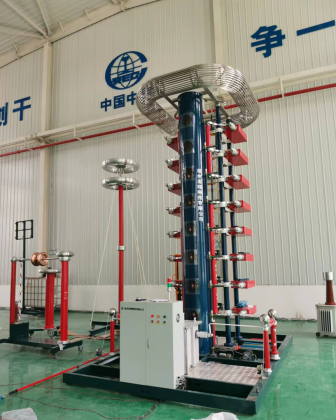
Impulse Voltage Generator
Generates specified high-voltage impulse waveforms for electrical insulation testing. For power cable applications, the required waveform and test arrangement must be determined by the cable design and applicable test requirements.
Impulse Voltage
Insulation Testing
Waveform Control
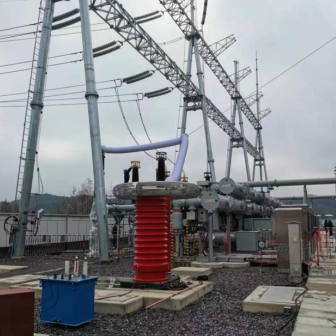
SF₆ FM Resonant Reactor
A variable-frequency resonant testing solution for high-voltage AC withstand testing of suitable capacitive loads, including applicable power cable systems. Resonant technology can reduce the reactive power required from the input supply under suitable operating conditions.
Variable Frequency
High-Voltage AC
Capacitive Loads
High Voltage DC Generator
Provides a DC high-voltage source for test procedures that specifically require DC testing. Suitability for a particular power cable must be confirmed according to its insulation system, cable type and applicable requirements.
DC Voltage Source
Insulation Testing
High-Voltage Output
Q & A
-
What tests are commonly performed on power cables?
Common tests depend on the cable design and applicable standards. They may include AC voltage withstand testing, partial discharge measurement, impulse voltage testing and other electrical or thermal tests specified for the cable system.
-
What equipment is used for high-voltage cable testing?
Typical equipment includes AC resonant test systems, high-voltage test transformers and appropriate voltage measuring equipment. Impulse generators, partial discharge measurement systems and high-current systems may also be required for specific test programs.
-
Why is a resonant test system suitable for long power cables?
Long power cables can present a high capacitive load during AC withstand testing. A variable-frequency resonant system can generate the required test voltage while reducing the reactive power demanded from the input supply under suitable operating conditions. The required configuration depends on the cable capacitance and test voltage.
-
What is the difference between routine tests, type tests and prequalification tests?
Routine tests verify specified performance on manufactured cable lengths or units. Type tests assess the design against defined requirements, while prequalification tests evaluate specified cable systems under prescribed long-term electrical and thermal stresses. The exact scope depends on the cable type and applicable standard.
-
How do I select the right power cable testing system?
Start with the cable type, insulation material, rated voltage, cable length, total capacitance and required test methods. The required voltage, test duration, frequency and applicable standards are then used to determine a suitable equipment configuration.